
Lab skills
Spot the hazards, follow the rules, keep honest records and clean up: what goes in which bin, and why.
Physics, chemistry, biology, earth and space, design and the arts, from the first school years to the last, mapped to 6 curricula. Every lab also works as a free-play sandbox.
Spot the hazards, follow the rules, keep honest records and clean up: what goes in which bin, and why.

Name the equipment, read scales, calipers, micrometers and meters, use a balance, light a Bunsen burner and use a calculator.
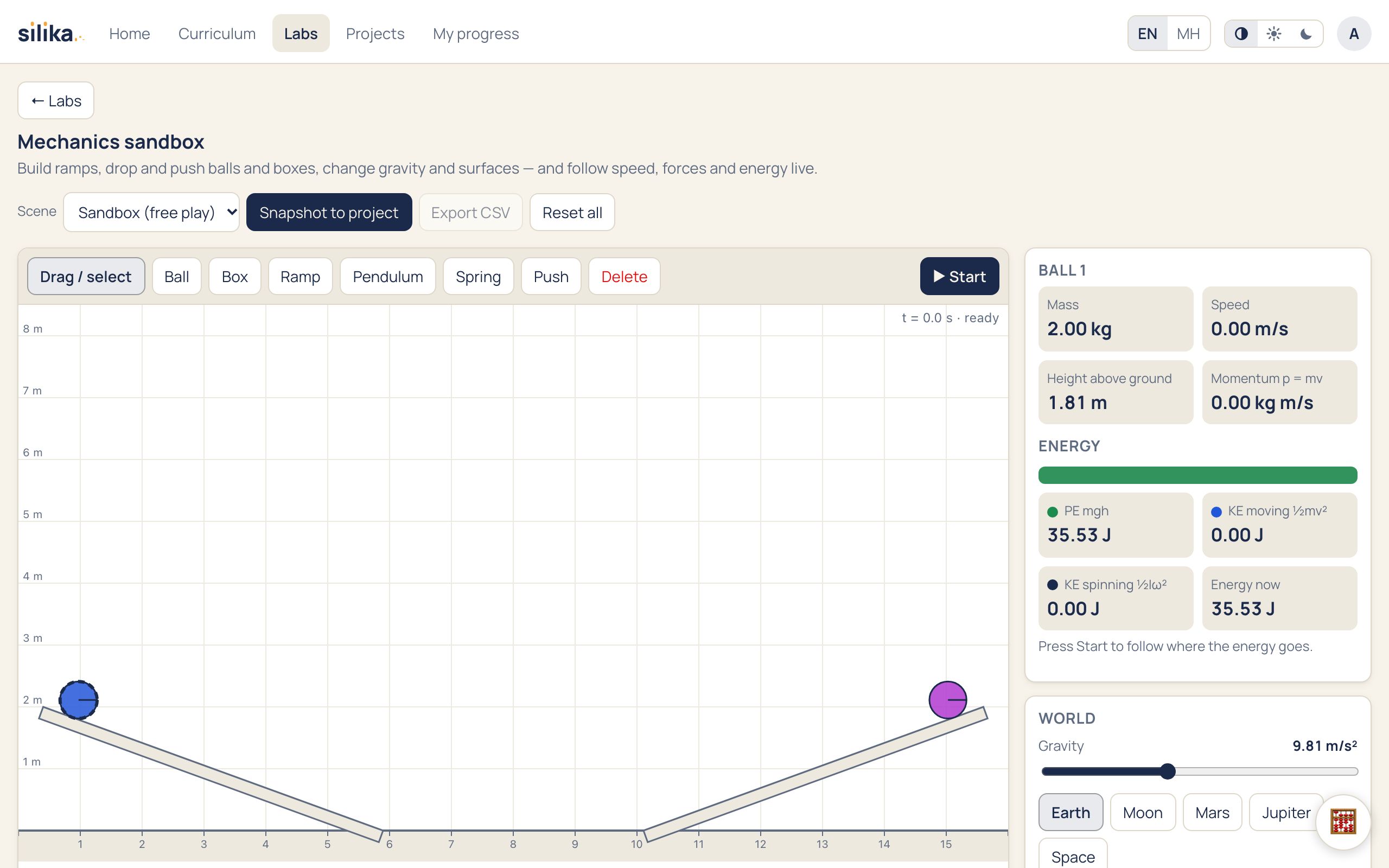
Bodies, ramps, pendulums and springs with live graphs.
18 experiments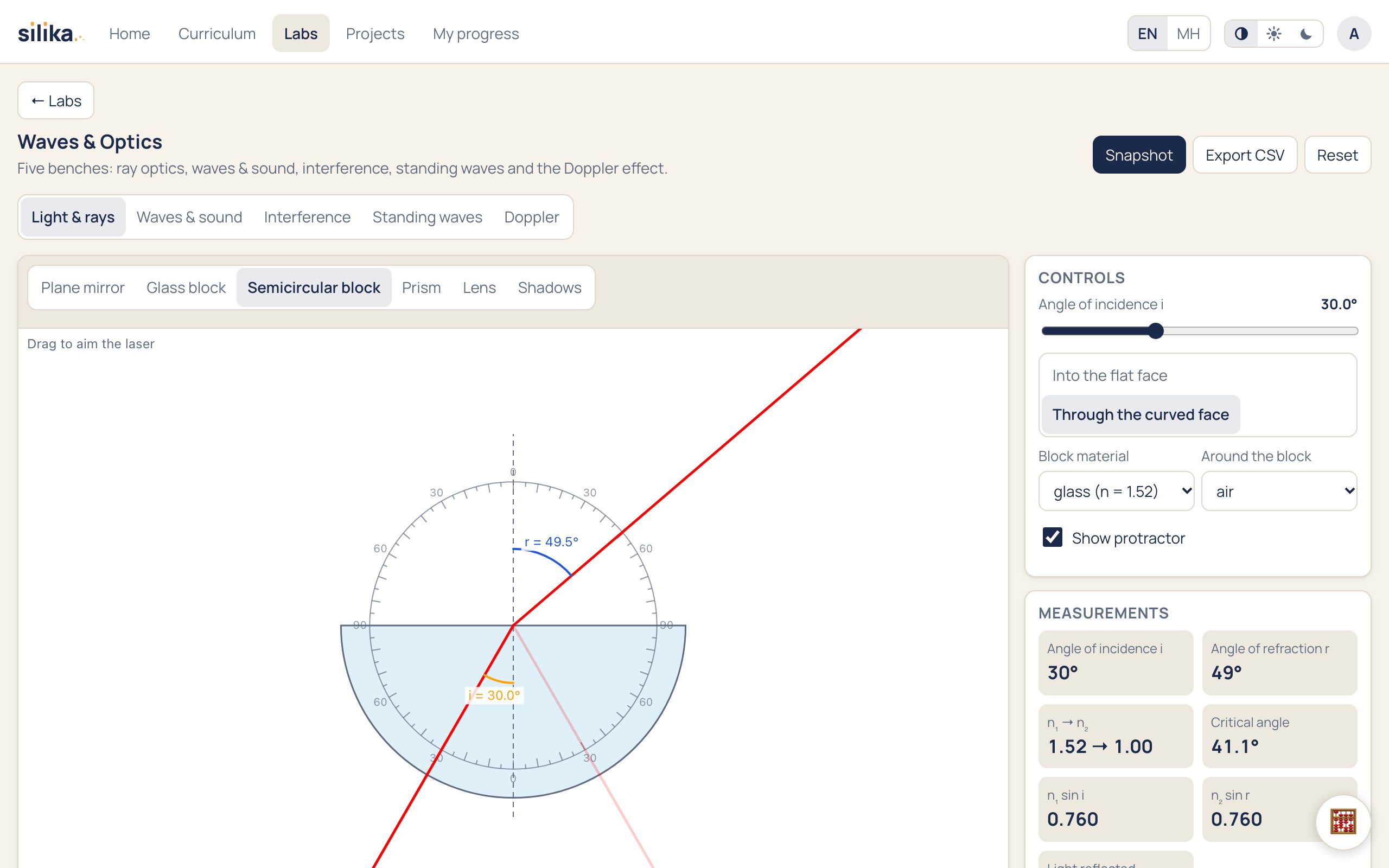
Light rays, lenses, sound, interference and standing waves.
12 experiments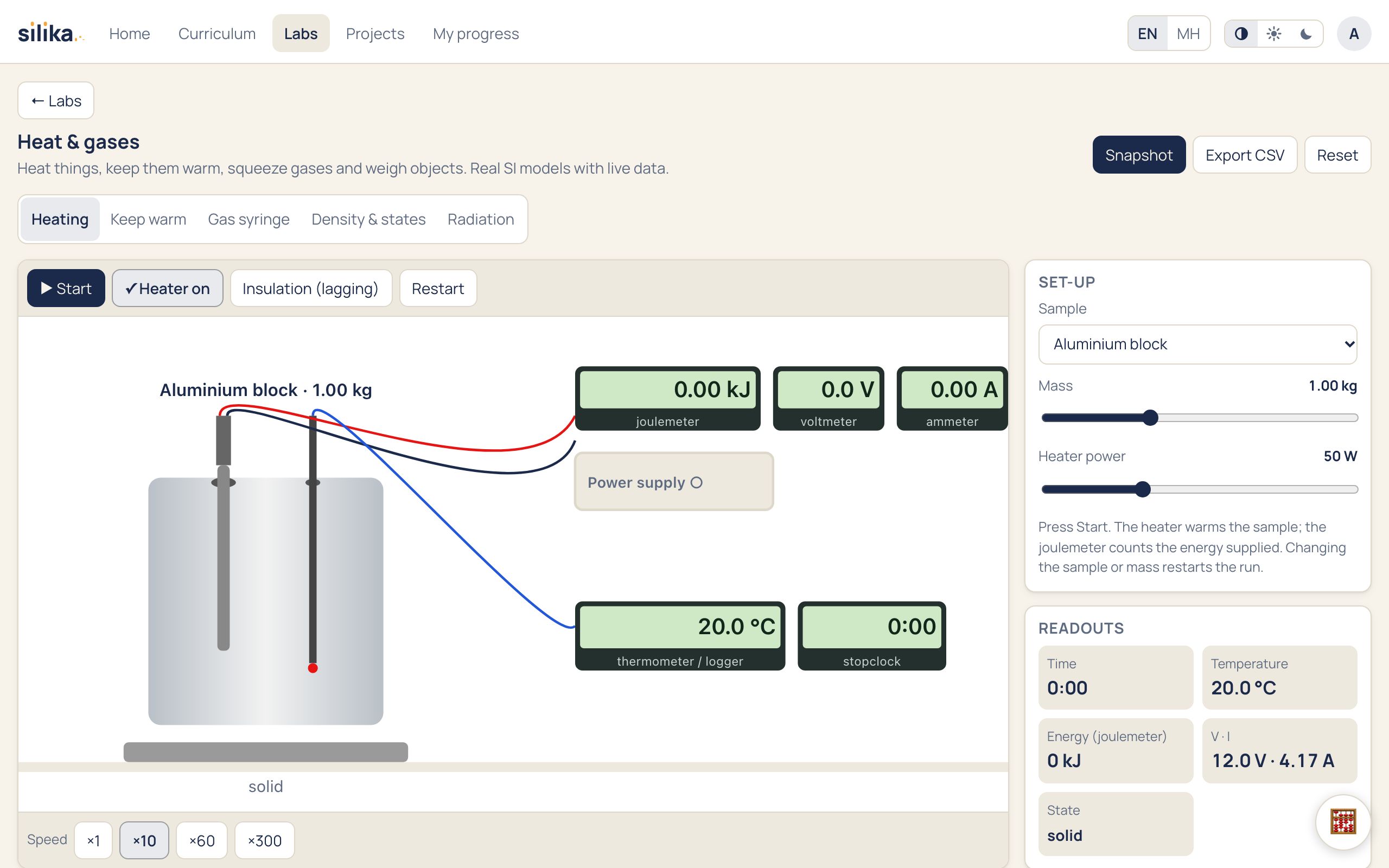
Heating, insulation, changes of state and gas laws.
10 experiments
Breadboard circuits with a real circuit solver.
11 experiments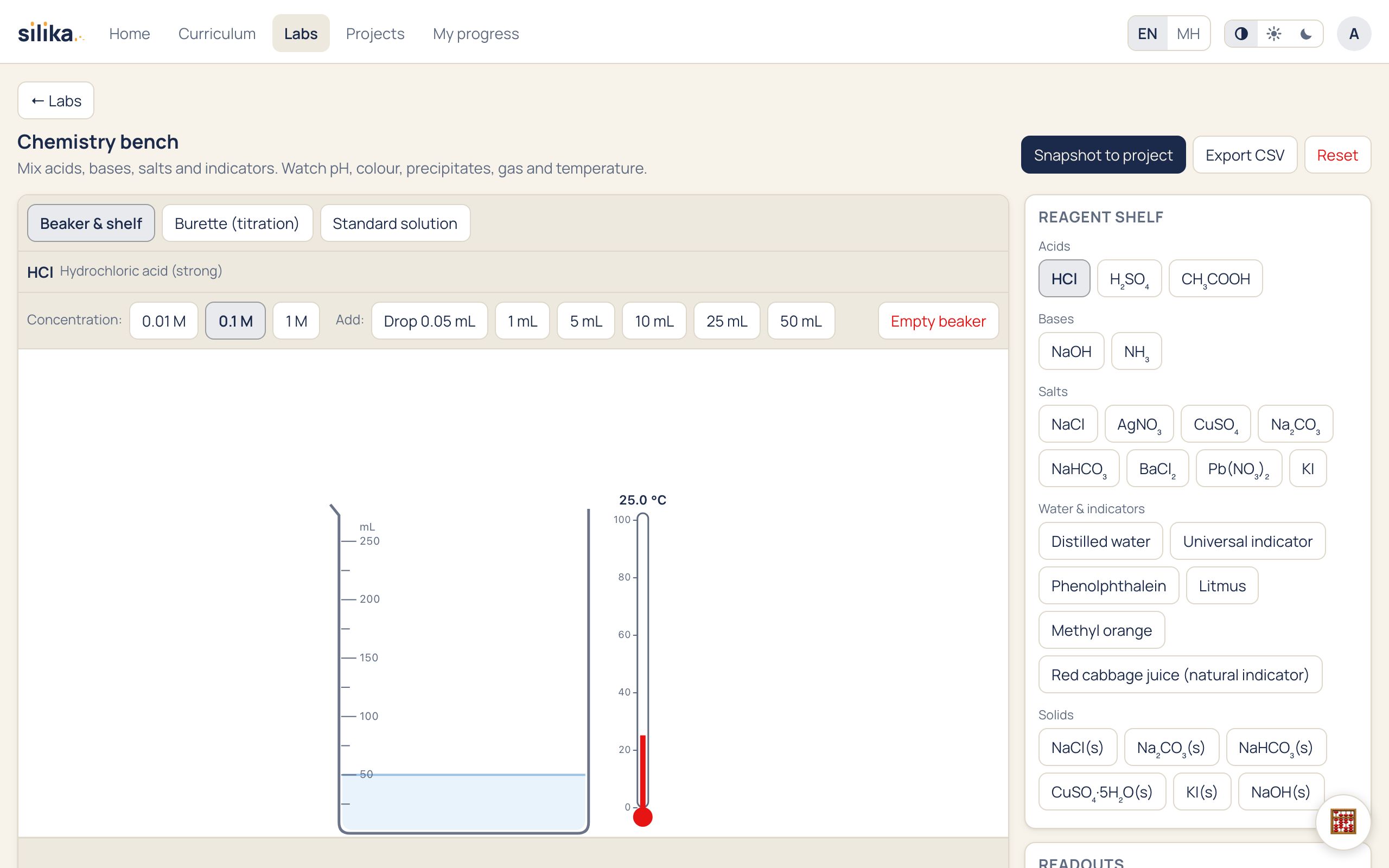
Acids, bases, indicators, titration and precipitates.
13 experiments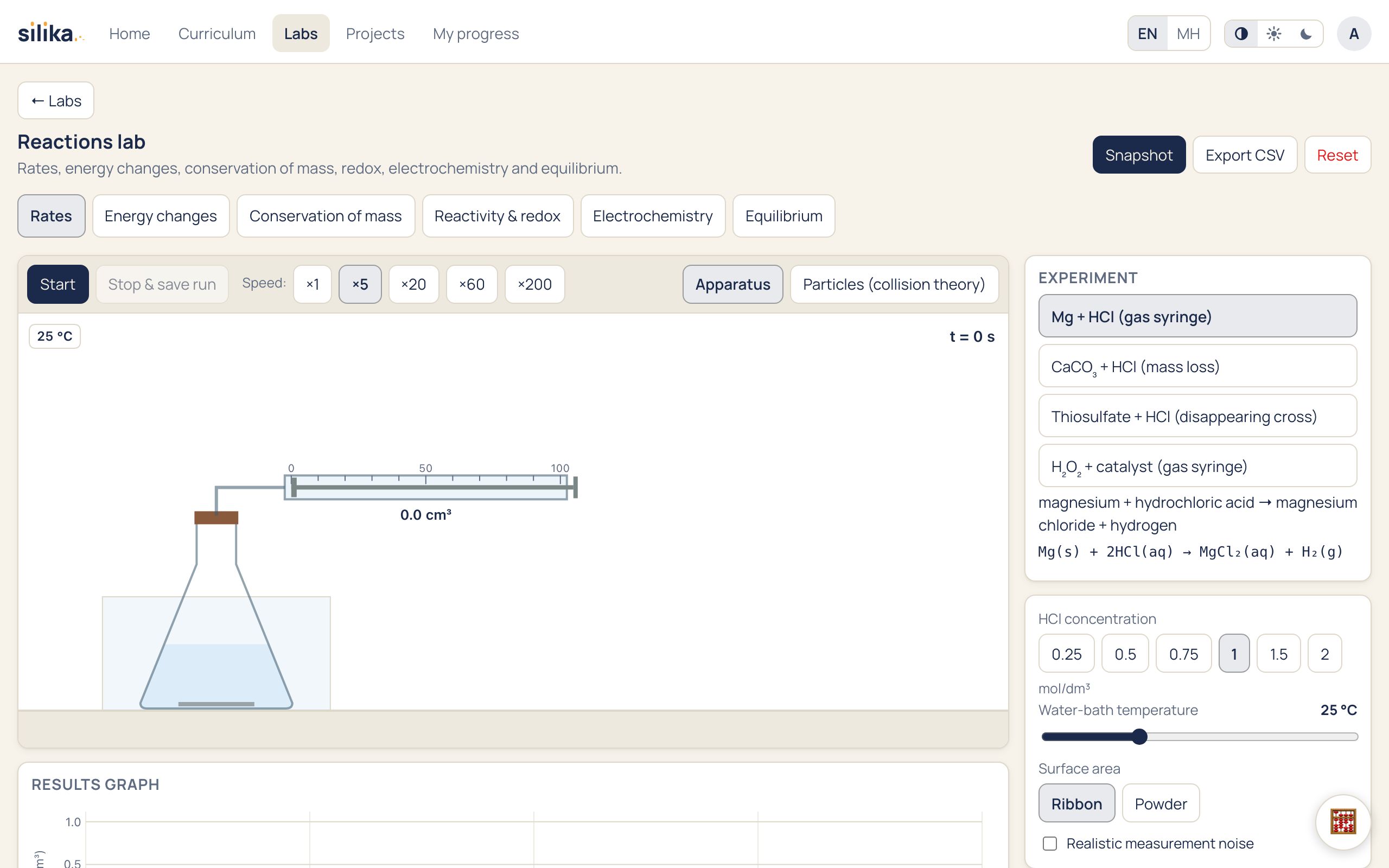
Rates, energy changes, conservation of mass, redox, electrochemistry and equilibrium.
16 experiments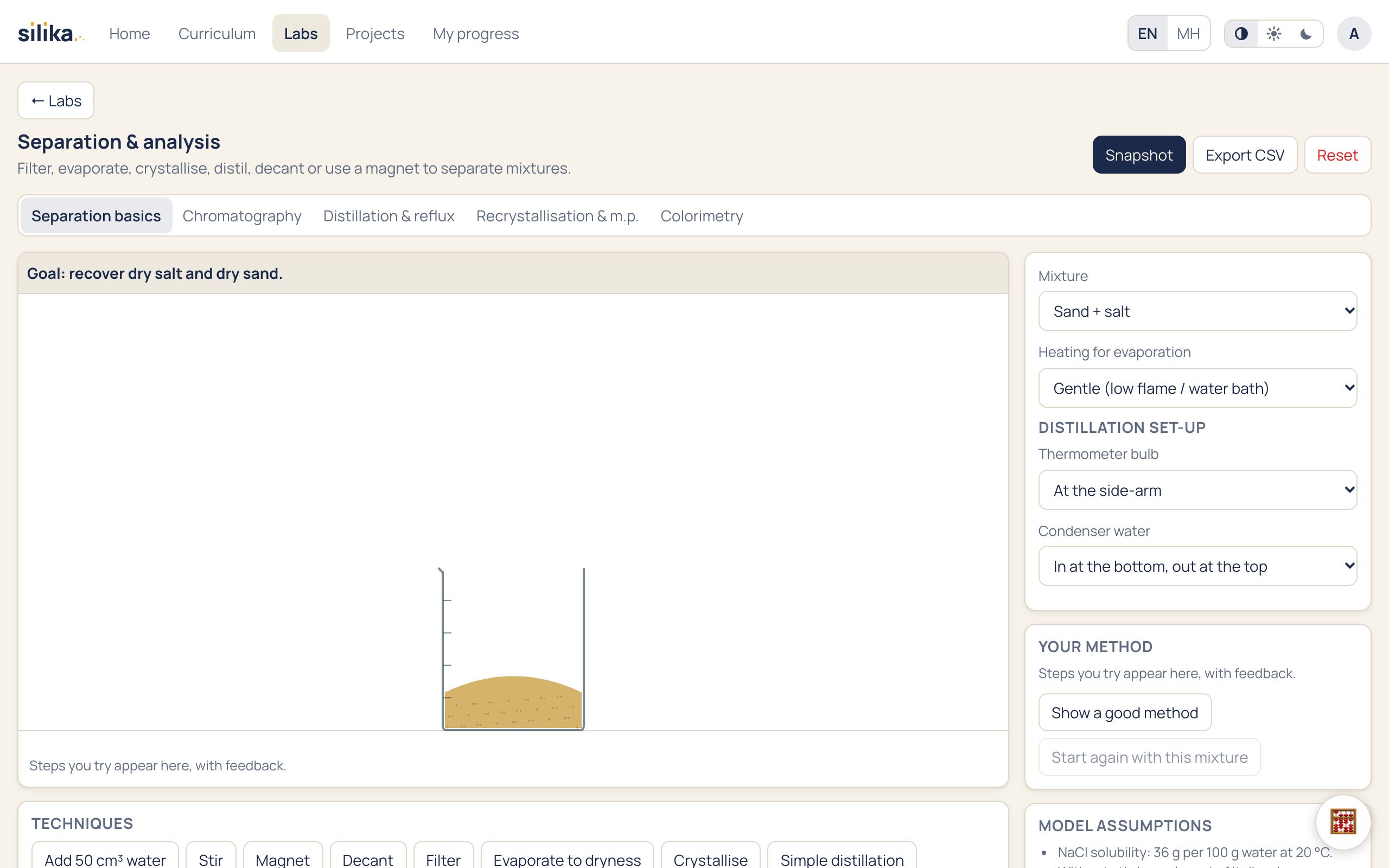
Chromatography, distillation, recrystallisation and colorimetry.
10 experiments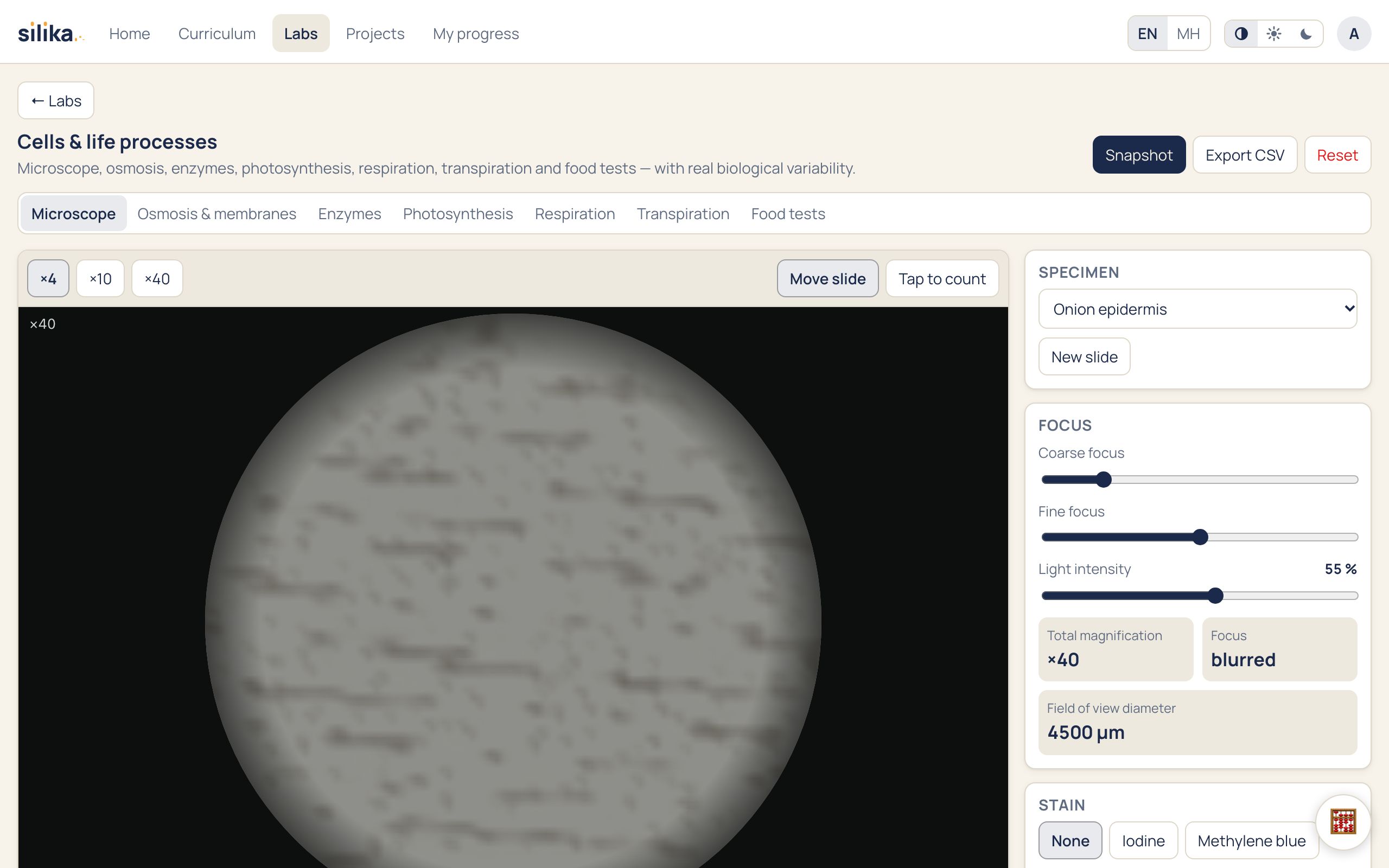
Microscope, osmosis, enzymes, photosynthesis, respiration.
24 experiments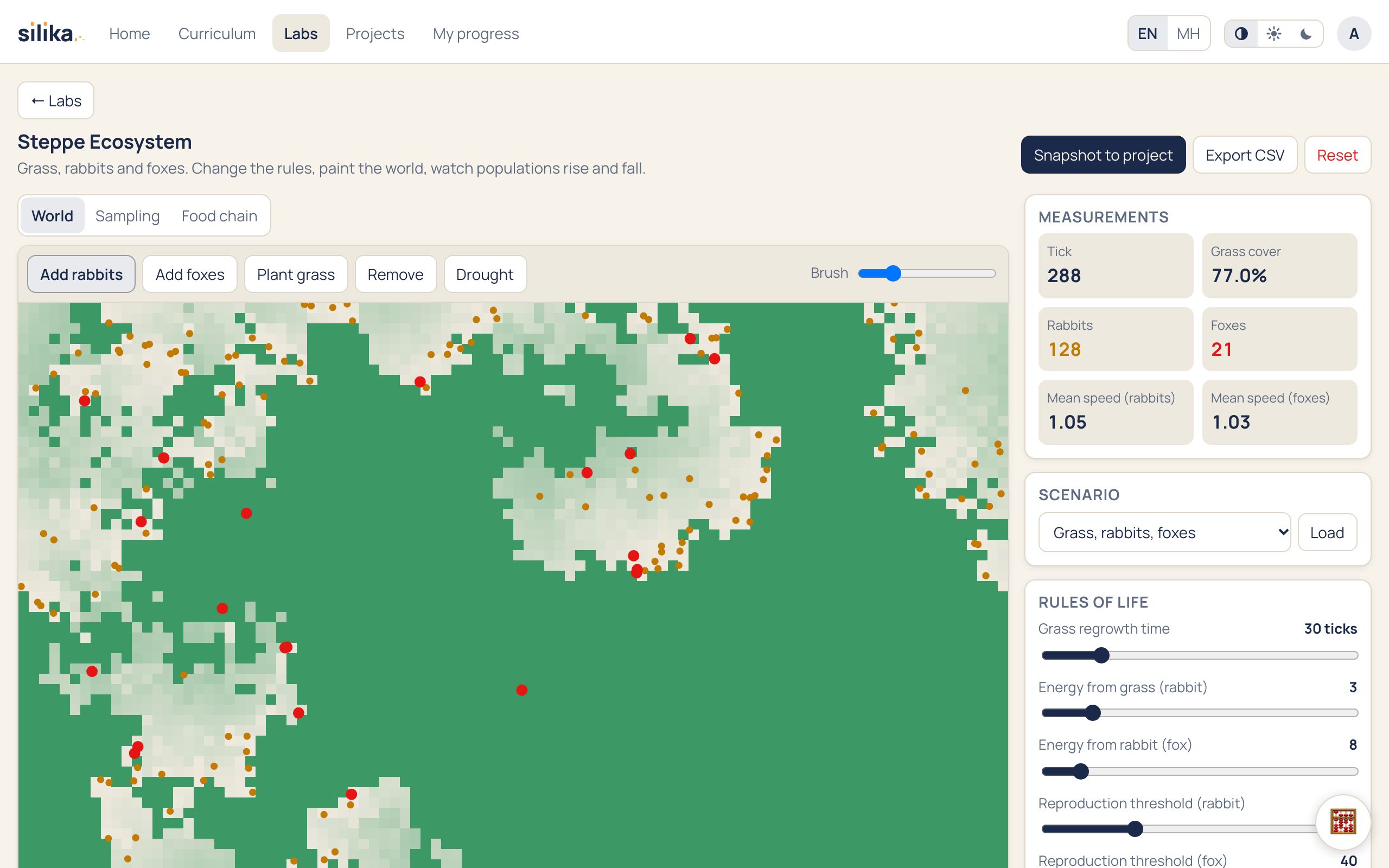
Grass, rabbits and foxes: populations and natural selection.
17 experiments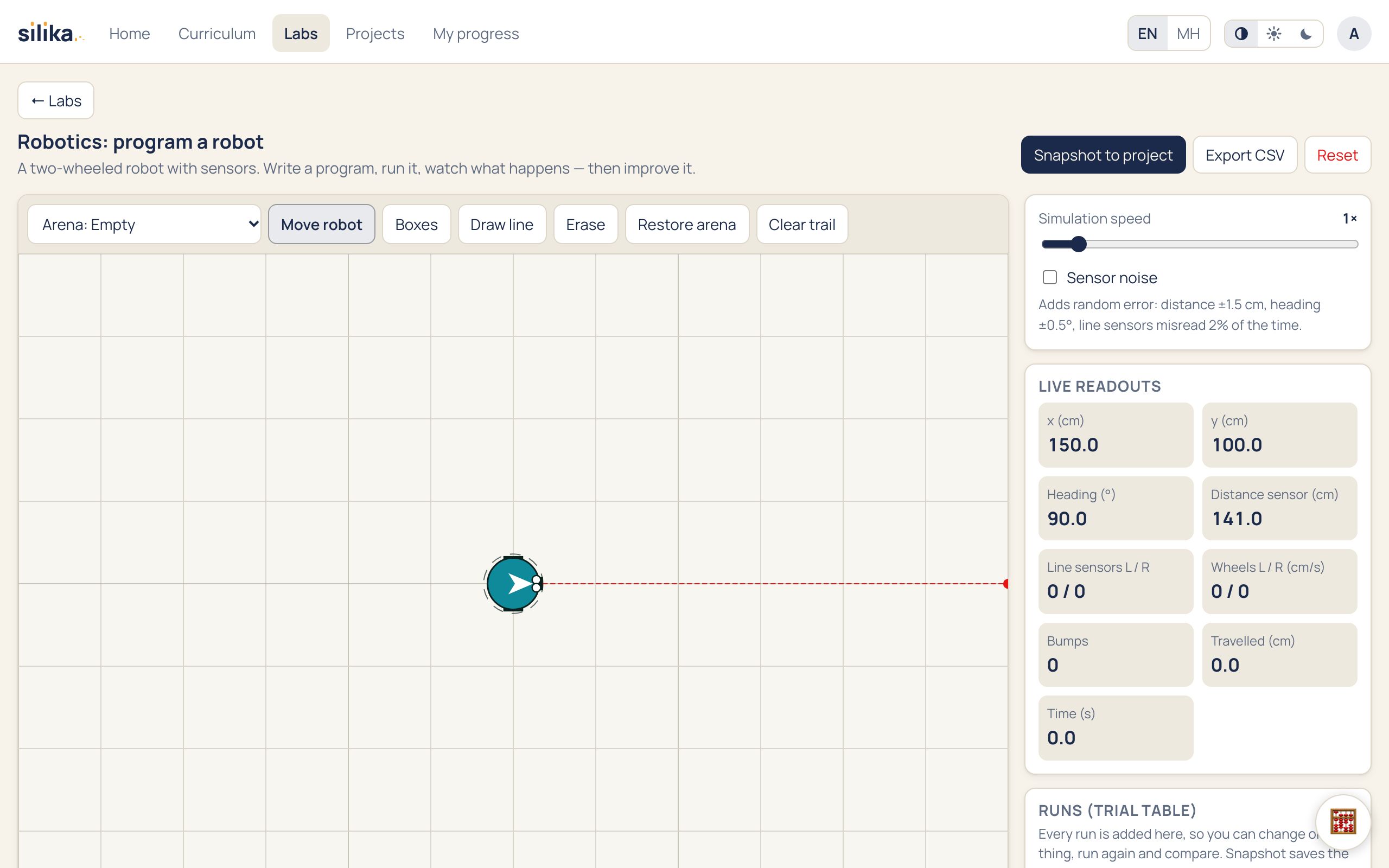
Program a robot with sensors to navigate and follow lines.
5 experiments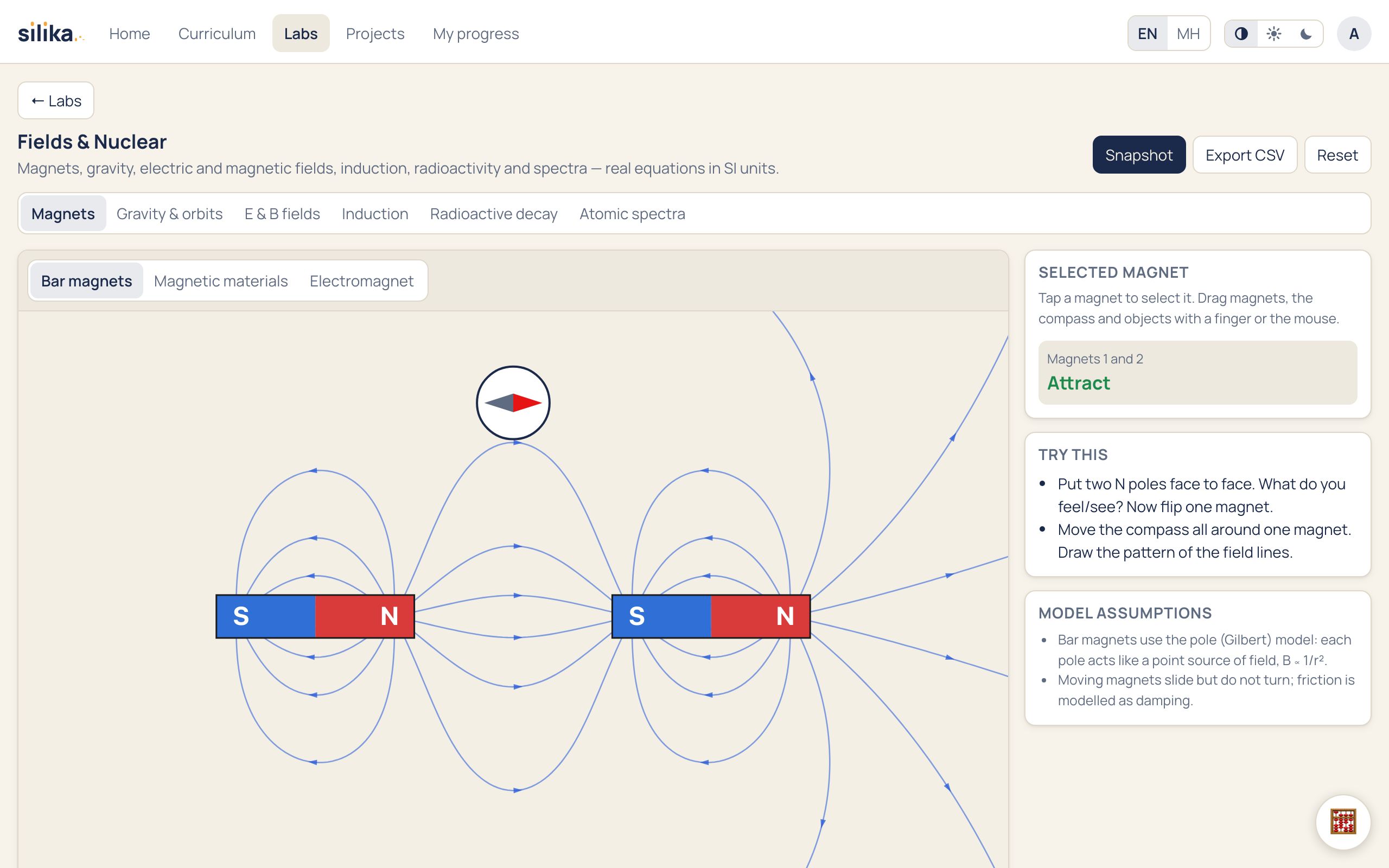
Gravity, electric and magnetic fields, induction, radioactivity.
11 experiments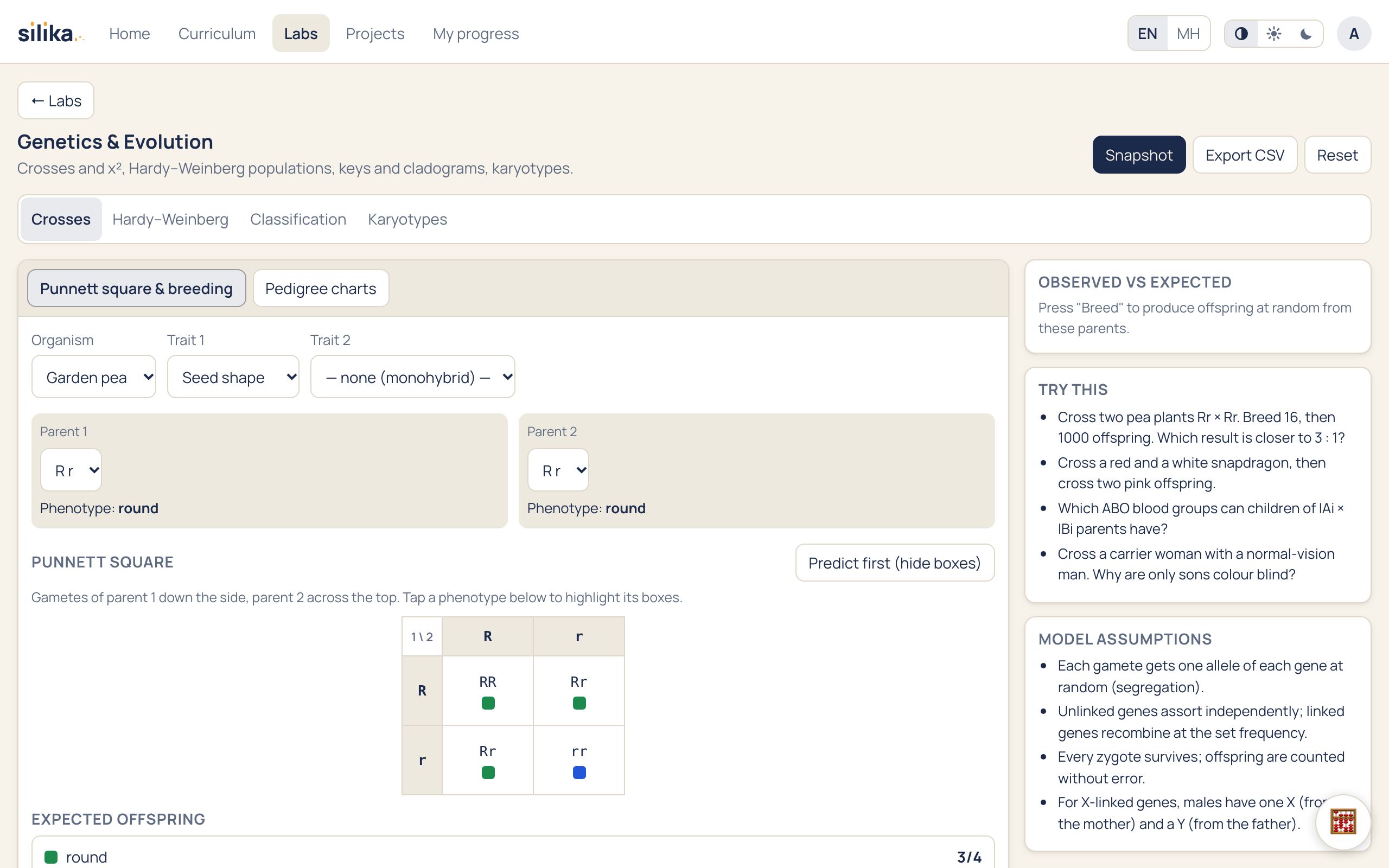
Crosses, Hardy–Weinberg, karyotypes, keys and cladograms.
11 experiments
3D molecules, VSEPR shapes and isomers.
3 experiments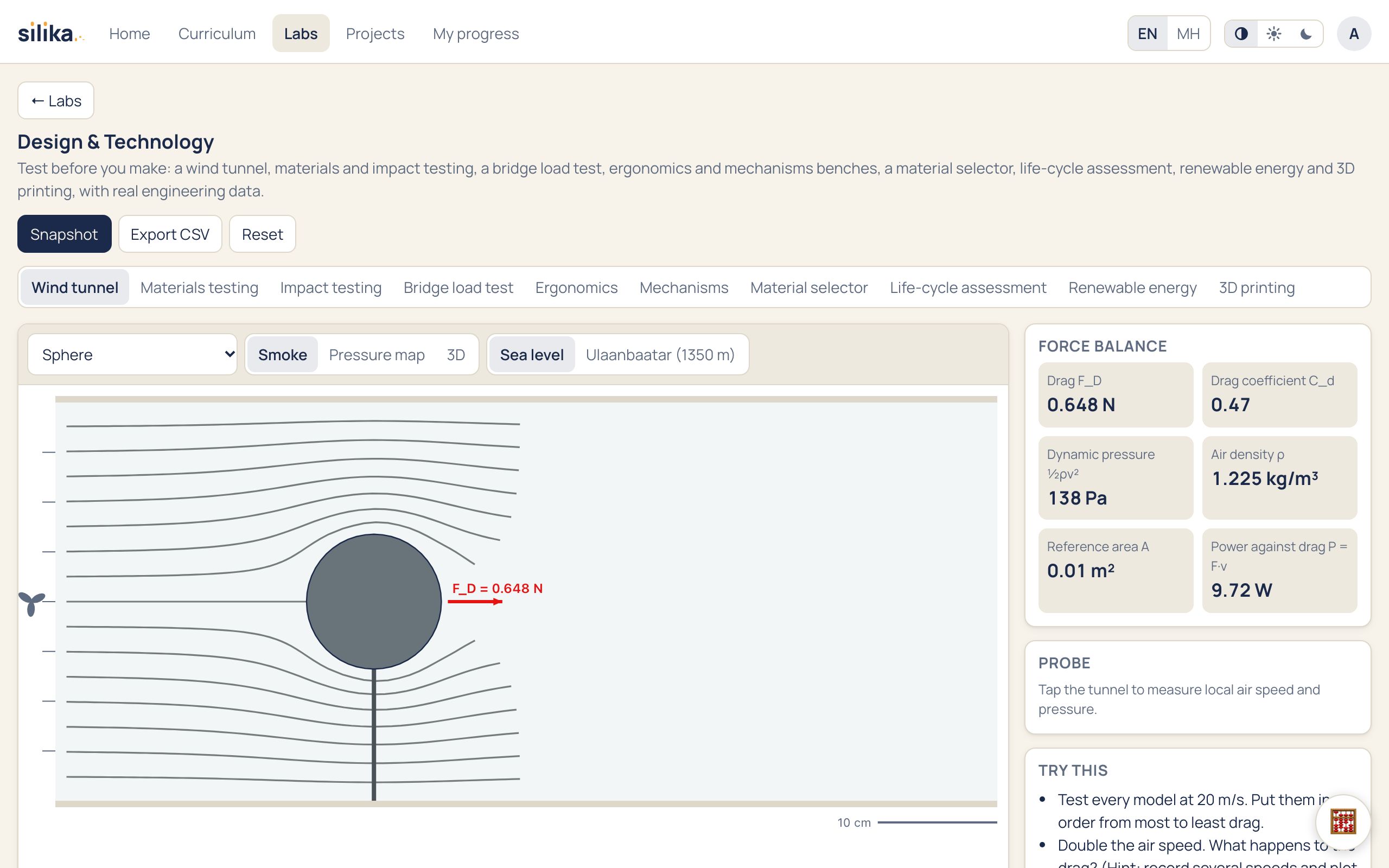
Wind tunnel, materials testing machine and bridge load tests.
32 experiments
Morin khuur strings and limbe pipes, harmonics and khöömei, scales and rhythm, room acoustics.
15 experiments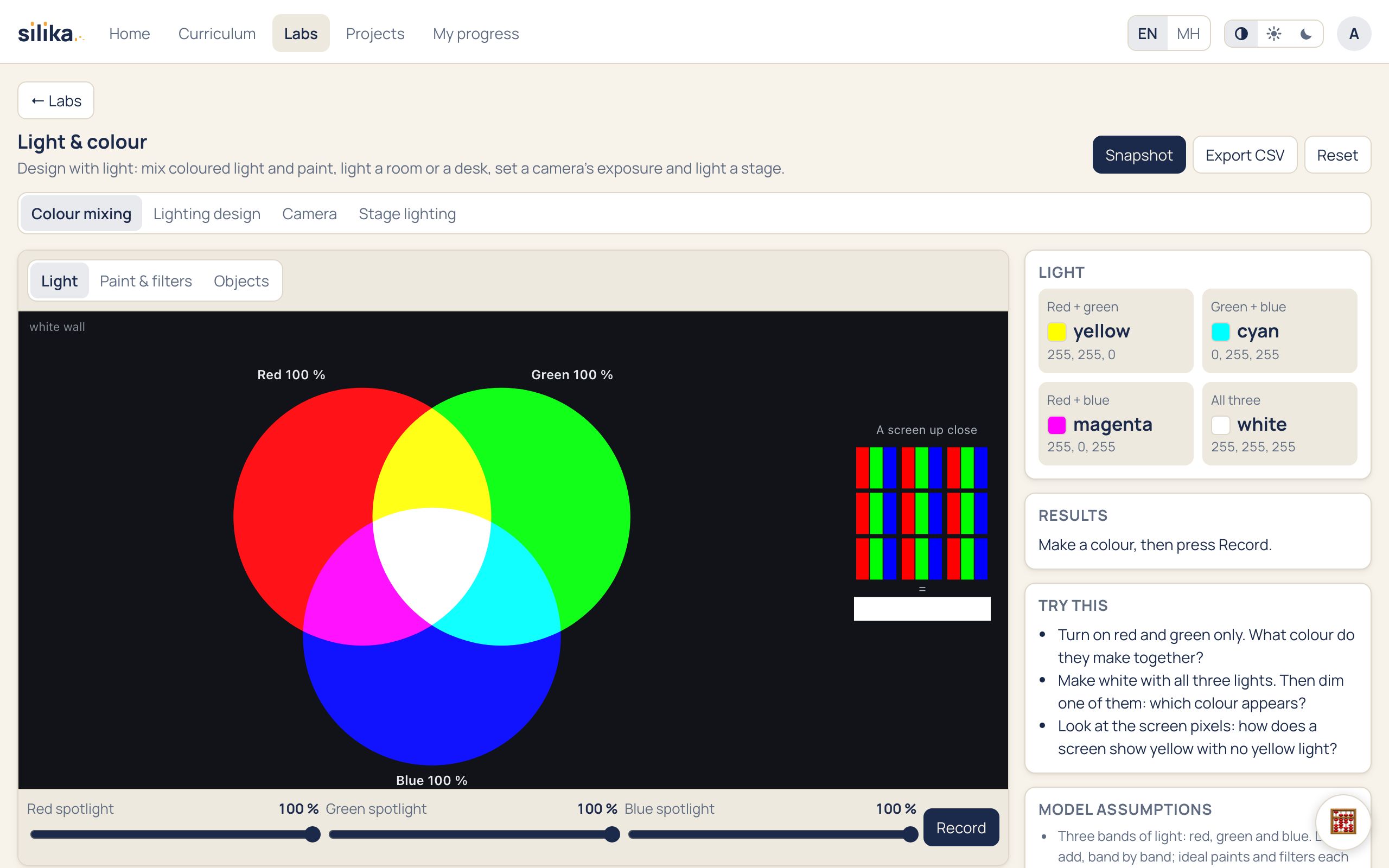
Mixing light and paint, lighting design, camera exposure and stage lighting.
12 experiments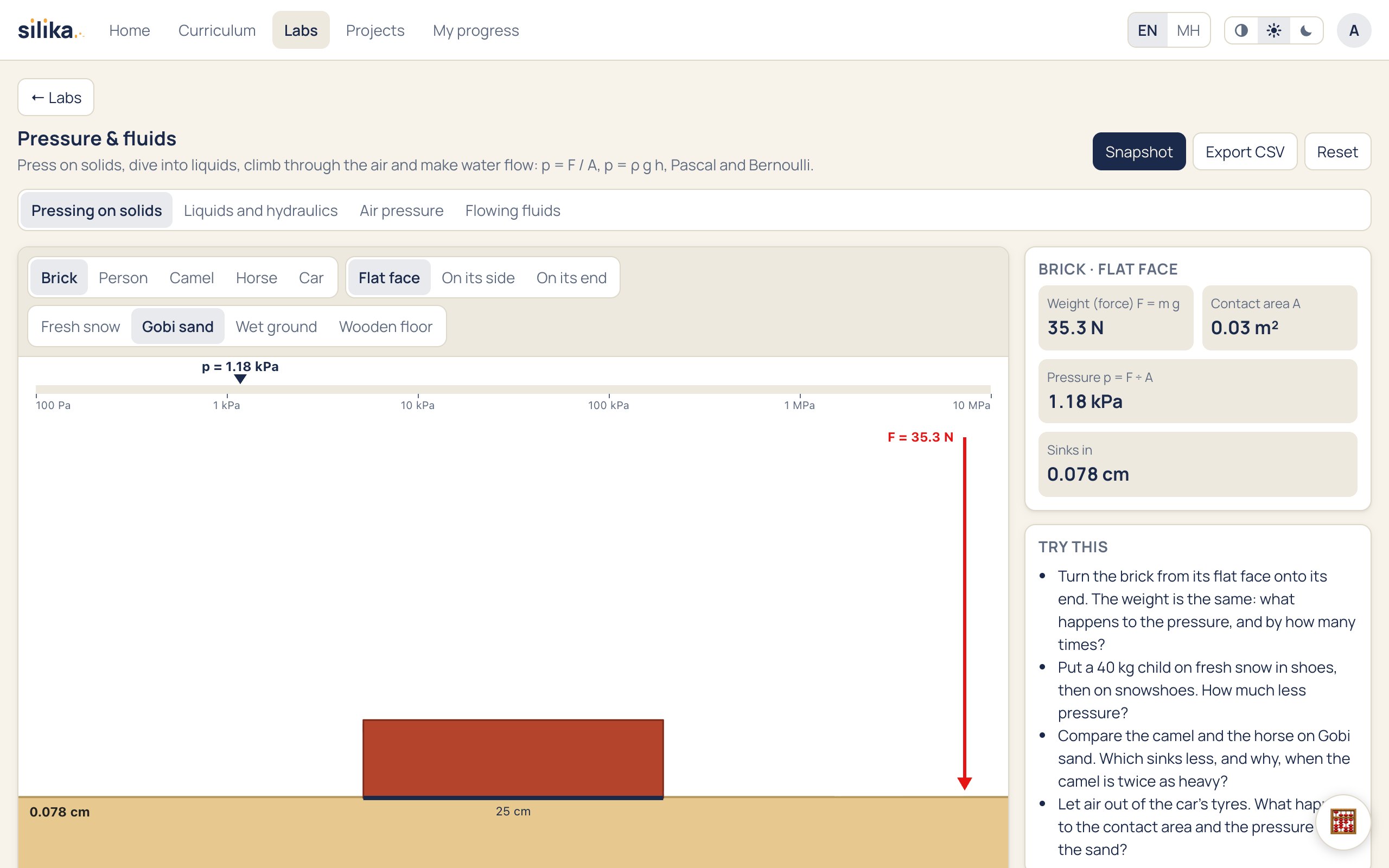
Pressure of solids, liquids and air: snowshoes and camels, manometers and hydraulic lifts, barometers at altitude, Bernoulli and the Venturi tube.
5 experiments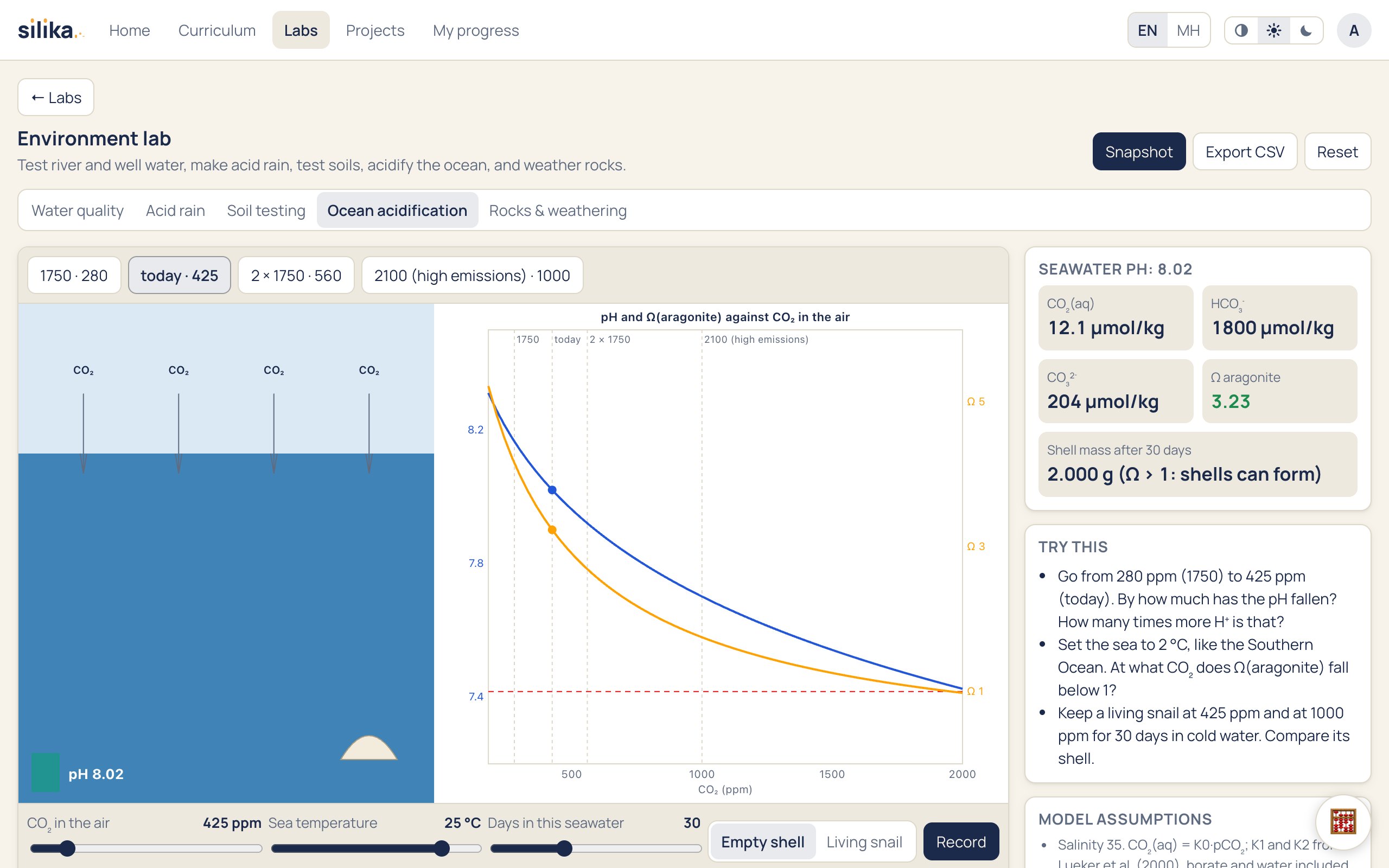
Water quality, acid rain, soil testing, ocean acidification, rocks and weathering.
5 experiments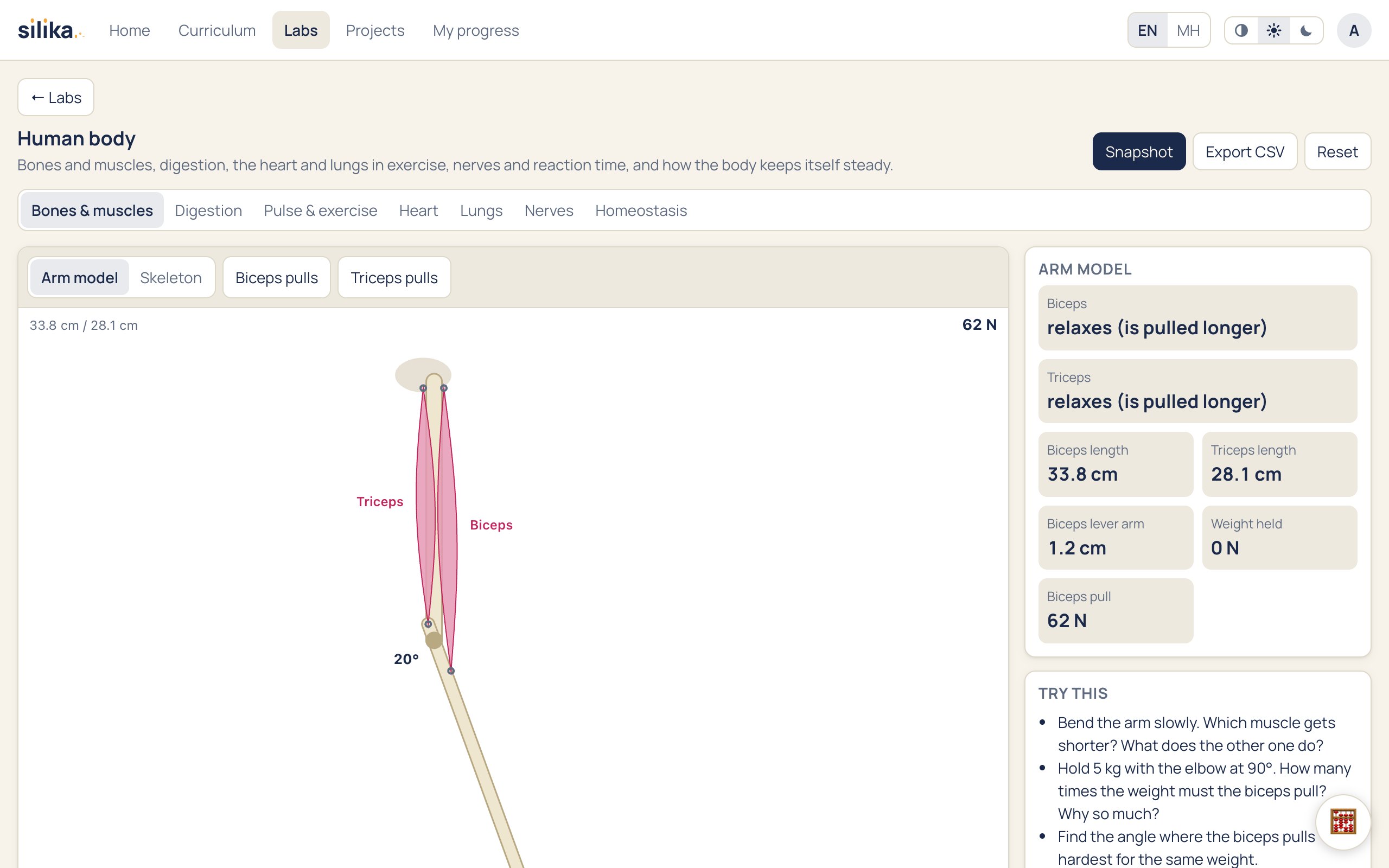
Bones and muscles, digestion, pulse and exercise, heart and lungs, nerves and reaction time, homeostasis.
7 experiments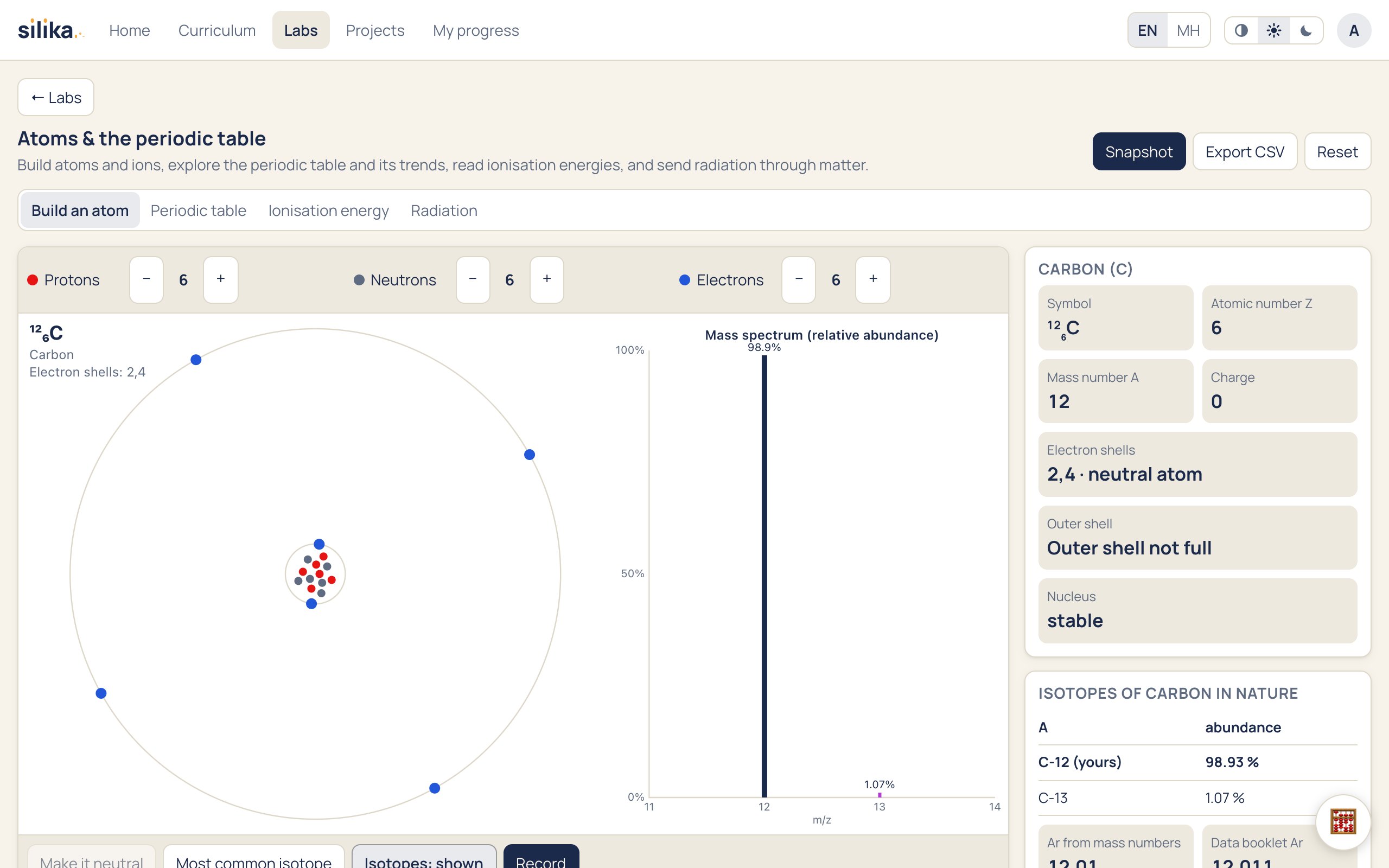
Build atoms, ions and isotopes, periodic trends, ionisation energies, and alpha, beta, gamma and X-rays through matter.
5 experimentsSafety, rules, honest records and clean-up: the habits every real lab needs.
5 experimentsName lab equipment, read scales, calipers and meters, weigh, light a burner and use a calculator.
7 experiments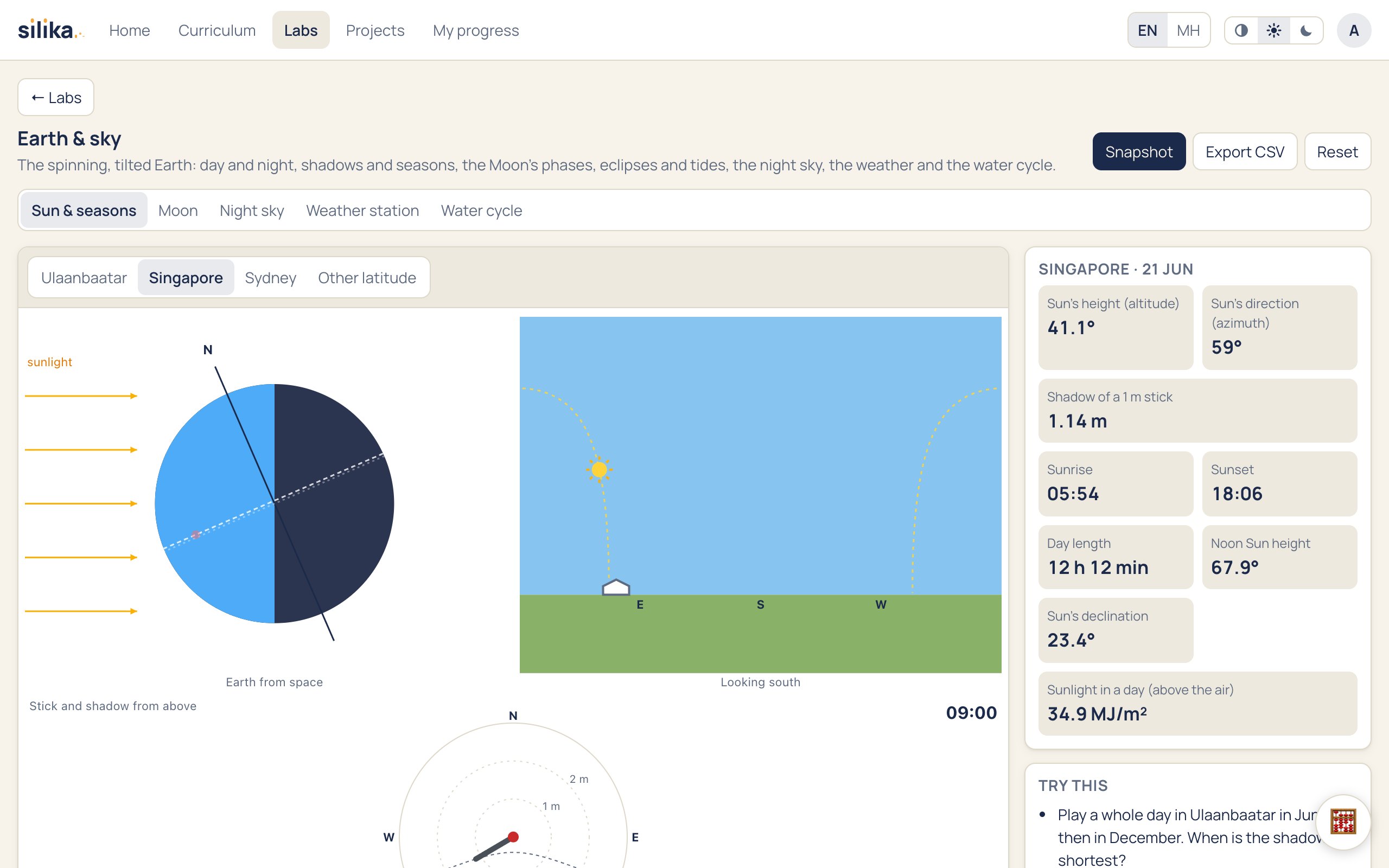
Day and night, shadows and seasons, the Moon’s phases, eclipses and tides, the night sky, weather and the water cycle.
8 experimentsChoose the curriculum your school or centre follows. Its stages, topics and codes lead the way, and each points to the experiments that teach it. Pupils keep their progress if the curriculum changes.
Every one of the 262 experiments
237 of 237 practical topics
140 of 141 practical topics
169 of 172 practical topics
162 of 162 practical topics
182 of 182 practical topics
Mongolian national curriculum topics use the terms of the national textbooks. Silika for the Singapore syllabus